Tuesday, February 23, 2016

This Is the Last Post, 1866, Week 5

    Dear reader, hello. My name is Rebecca, Aaron's fianée. I'm truly sorry to inform you that the former owner of this blog, Aaron Ainley, has passed away on April 7, 1865, two days before the Confederacy surrendered. He had a glorious death, fighting for his homeland until the last minute.
    Last March, Aaron was deployed to a force under direct control of General Robert E. Lee. General Lee, after failing to break the siege of Petersburg, retreated on April 2 and set Richmond on fire in order to prevent the Union soldiers from getting the supplies. A few days later, when he tried to join the other Confederate forces in North Carolina, he was trapped at the town of Appomattox Court House, Virginia. His army fought back bravely, but still suffered a drastic defeat. And unfortunately, Aaron sacrificed his life to defend his honor as a Confederate soldier.
    On April 9, Lee formally surrendered to the Union. And in two months, all the remaining Confederate generals surrendered as well. The war finally came to an end.
Lee's Surrender

    As a Marylander, I mourned for my lover's death while I celebrated the Union victory of the four-year-long war. As the 13th Amendment was ratified in December, 1865, slavery has disappeared in the United States of America. Although I stand neutral on the issue of slavery, I truly feel sorry for Aaron's family. They not only lost two brothers, but also lost their slaves and their way of living. I visited their family earlier this year, and I'm very shocked by the extent of destruction in the South. Big cities like Atlanta and Richmond lay in ruins, and many plantations were wasted. These were all traumatic impacts of the "total war", and the abolition of slavery. Reconstruction has started, but the recovery of southern economy is slow and hard. Many former slaves, as well as former slave owners, are disoriented because their old way of living is gone. Although the African Americans are now granted the right to own land and control their own lives, the promise of freedom isn't fully delivered because many of them don't know where to start.

Destruction in the South

    I have to say that all these misery is very impressive. The end of the war did bring back the southern states to the country, but also brought in the problem of southern hardships on economy. Now, the South mostly relies on northern investment, and agriculture remains the center of economy in the South while the North is going through sweeping industrialization. I think the Union should have done something, or at least come out with a plan for reconstruction before they completely throw out slavery. Their goal of abolition is achieved, while the South is left in chaos and ruins. The South will no longer threat to secede, nor will it question the federal authority. The federal government is now playing a bigger role in our nation.
    On the other hand, the North celebrates its victory as well as its economic bloom. The northern tariff protected northern industry from foreign competition, and led to a big progress in manufacturing and a quick spread of industrialization. The nation, therefore, has risen as one of the best economic powers in the world. I hope this trend will continue to grow, and I also hope that the South will soon walk out of the shadows of the war.

Northern Industrialization

    I know Aaron would be upset if I ever told him this when he was alive, but I have expected the Union to win this war. The Union enjoyed Lincoln's steady leadership. He not only successfully kept the nation together, prevented the secession of border states and maintained unity within the nation, but also participated in commanding the war and appointing reliable military leaders such as Grant and Sherman. The Emancipation Proclamation also played an important role in the Northern victory, since it inspired peole's will to fight, and also attracted African Americans to support the war. And of course, I think the most important reason was the North's advantages in population and resources. They also had a better use of technology, such as railroads and telegraphs. The South lost the war mainly because they ran out of men and supplies, and they suffered huge losses and destruction under the strategy of "total war". If they had more resources, the war might have a different ending, or at least it wouldn't have ended as quickly.
    Another astonishing event that happened after the war was President Lincoln's assassination. On April 14, 1865, Lincoln was shot while attending a comedy at Ford's Theatre, and he died the following morning. The shooter, John Wilkes Booth, was later found to be participating a plot of killing all the influential northern leaders so that the South would have a chance to defeat the North while they are in chaos.

Assassination of Lincoln

    Of course, this conspiracy group was executed in the end. They did not succeed in killing any of the other important northern leaders, although the secretary of State, William Seward, was attacked and seriously injured.
    The death of Lincoln reunited the North. Both supporters and critics started to praise Lincoln's great leadership, and viewed him as a national hero as well as a symbol of freedom. His assassination played a big role in bringing the nation together after the war ended.

Lincoln's Funeral

    However, I don't personally agree that Lincoln was such a perfect president. He did have outstanding skills as a powerful leader, but he abused the concepts of freedom by suspending habeas corpus and announcing "the draft". He centralized too much power to enforce what he believed was right. But he ignored the voice of the Southerners, like Aaron's family. He took away slavery, threw the South into the air, but did not give it wings. I'm afraid he was not the best representation of the people in his nation.
    All in all, the war has drawn to a conclusion, and so has this blog. Aaron has left us forever. As a southern slave owner and a Confederate soldier, Aaron insisted his doctrines and followed his beliefs until the very end. He was a caring lover, an honorable soldier, as well as an inspiring friend. Dear reader, I hope you have enjoyed learning about Aaron's unique perspectives on various events that have happened throughout all these years, and I'm truly glad that I have met him in my life.
    I will preserve this blog, so that Aaron's voice can be heard, and we can all take a minute to reflect on the tension and warfares during the past years before we move on to the next page in life. Wars are always cruel, but they push us towards historical progress.
    In rememberance of Aaron Ainley. Amen.

Bibliography
Alltime Conspiracies. The Assassination of Abraham Lincoln. YouTube.
     YouTube.com, 11 Apr. 2014. Web. 23 Feb. 2016. <https://www.youtube.com/
     watch?v=yEtVtSC2SWQ>.
Barnard, George N. Ruins of Confederate Charleston. 1866. MSNBC. Web. 22 Feb.
     2016. <http://www.msnbc.com/msnbc/
     remembering-the-american-civil-war-150-years-later#slide7>.
Brady, Mathew B. Lincoln's Funeral on Pennsylvania Ave. 19 Apr. 1865.
     Brady-Handy Collection. Lib. of Cong., Washington, D.C. Library of
     Congress. Web. 23 Feb. 2016. <http://www.loc.gov/pictures/item/
     brh2003004934/PP/>.
Guillaume, Louis. Robert E. Lee's Surrender at Appomattox Court House. 1867.
     Appomattox Courthouse National Park. The Telegraph. Web. 22 Feb. 2016.
     <http://www.telegraph.co.uk/news/worldnews/northamerica/usa/11522910/
     On-the-Civil-Wars-150th-anniversary-black-people-are-still-being-killed-in-the-US
     A.html>.
LOC Reproduction. Depot of the U.S. Military Railroads, City Point, Va. 1864.
     WigWags. Web. 22 Feb. 2016. <https://wigwags.wordpress.com/2008/
     01/19/were-the-north-and-south-evenly-matchedon-the-rails/>.

Monday, February 22, 2016

Confederacy Never Falls!!! 1865, Week 5

    As the war goes on and on and on, my fellow soldiers are all getting tired of it. And since the situation is becoming worse on our side, many people are becoming pessimistic about the outcomes. They have been talking about surrender and negotiation of peace. When I ever feel tired or unwilling to fight, I would think of Rebecca. We write to each other regularly, and our love for each other has developed even deeper since we apparted.
    Last year, Lincoln appointed two new generals to the Union army: Grant and Sherman. They believe in a strategy known as the "tatal war", which involves striking civilians as well as the military. They don't care about their own losses, as long as we lose more than they do. They not only want to weaken our army, but also want to weaken the southern economy and people's will to fight.

General Grant

General Sherman

    This strategy of "total war" succeeded in several battles such as the Wilderness, Spotsylvania Court House and Cold Harbor. I think this is very cruel and unhuman because it involves the innocent civilians, and also brings a lot of damage to the country. These generals are trying to fully use their advantages in population and resources, although it's extremely cold-blooded to the southern residents.
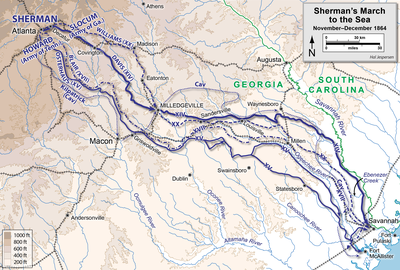
    In May 1864, Sherman sent 60,000 troops on a march to capture the port of Savannah, Georgia. This "March to the Sea" lasted 60 miles. Sherman's army seized and destroyed all the properties along their way.

March to the Sea Route

Ruins Along the March

    On September 2, Sherman's army occupied the city of Atlanta, which had been abandoned by the Cofederate army, and burned it to ground. Then the troops continued their march. In late December, they captured Savannah and accomplished their goal.
    I think it's so unnecessary to cause all these destruction -- although it might be a good short-term strategy, it would lead to a lot of hardship reconstructing the cities later. Besides, it's extremely cruel to destroy the southern cities completely. If the Union wants us to rejoin their nation, they shouldn't have been so harsh on us -- what good can they get in long term, except more hatred from the South and a lot of unnecessary effort for reconstruction?
    Late last year, another bad news added onto our despair -- Lincoln won the reelection with 212 electoral votes out of the total of 233. I was very upset to hear that Lincoln became President again. In my opinion, he's too stubborn and narrow-minded on his "equality" dream. He doesn't really have a plan to solve the unemployment problem that would rise if slavery is abolished. He doesn't see the racism problem either. He is only forcing the country to go along the path as he wishes. He not only holds control of military power, but also suspends habeas corpus which abuses people's fundamental freedom. From his presidency, I can see a shadow of dictatorship, and I believe it's very dangerous to have him as the president.
    Sadly, after we suffered so much losses and destruction, this February, our vice president, Alexander Stephens met Lincoln to negotiate a peace to end the war. However, that wasn't very successful, because Lincoln was planning on passing the 13th Amendment, which would outlaw slavery in the United States. That is absolutely not acceptable -- agriculture is the core of economy in the South, and we are not going to have a future without slavery! Therefore, the negotiation failed, and we continued into war.
    This March, he gave the Second Inaugural Address, in which he declared his vision of a united and peaceful nation. It's impossible to reach a "united and peaceful nation" with so much descrimination going on, and besides, what the North did to us would only cause the nation to be more divided if we do become one.

Lincoln's Second Inaugural Address

    Anyways, I do not believe in a future without slavery. Equality is a fairy tale. Abolition would not do any good to our homelands. My fellow soldiers should not die for nothing! The North wants to implant their beliefs into ours, and we shall never yield to them!
CONFEDERACY NEVER FALLS!!!

Bibliography
Barnard, George N. Ruins of the R. R. Depot Charleston S. C. 1865. Chicago
     History Museum, Chicago. Lincoln at 200. Web. 21 Feb. 2016.
  <http://publications.newberry.org/lincoln/exhibits/show/thefierytrial/pressed/
     shermansmarch>.
Brady, Mathew B. Ulysses S. Grant. N.d. National Archives. Civil War Trust. Web.
     21 Feb. 2016. <http://www.civilwar.org/education/history/biographies/
     ulysses-s-grant.html?referrer=https://www.google.com/>.
- - -. William Tecumseh Sherman. 1865. Wikipedia. Web. 21 Feb. 2016.
     <https://commons.wikimedia.org/wiki/File:William-Tecumseh-Sherman.jpg>.
Gardner, Alexander. Abraham Lincoln Second Inaugural Address. 4 Mar. 1865. Lib.
     of Cong. Wikipedia. Web. 22 Feb. 2016. <https://commons.wikimedia.org/
     wiki/File:Abraham_Lincoln_second_inaugural_address.jpg>.
Jespersen, Hal. "Map of the Savannah Campaign." Map. Wikipedia. Wikipedia.com,
     25 Sept. 2013. Web. 21 Feb. 2016. <https://commons.wikimedia.org/wiki/
     File:Savannah_Campaign.png>.

Sunday, February 21, 2016

Letters from My Brother, 1863, Week 5

    As soon as I returned to the front, an astounding message arrived -- my brother, John, who was fighting in a force directly commanded by General Lee, has lost his life in the recent Battle of Gettysburg. He died due to a bullet that went straight through his heart, and his body has been sent back to my family in Mississippi for an honored funeral. Along with this depressing news, I received some letters written by him.

Letter 1
Dear Brother,
    How is everything on your side? I'm doing all fine, and our force just won two remarkable victories.
    Last December, General Lee, aided by Stonewall Jackson and James Longstreet, led us to a victory at Fredericksburg, Virginia. Although we only had less than 80,000 people, we still succeeded in defeating the Union force of about 120,000 soldiers, led by General Burnside. The Union army suffered over double of our casualties.

Battle of Fredericksburg, Morning of December 13

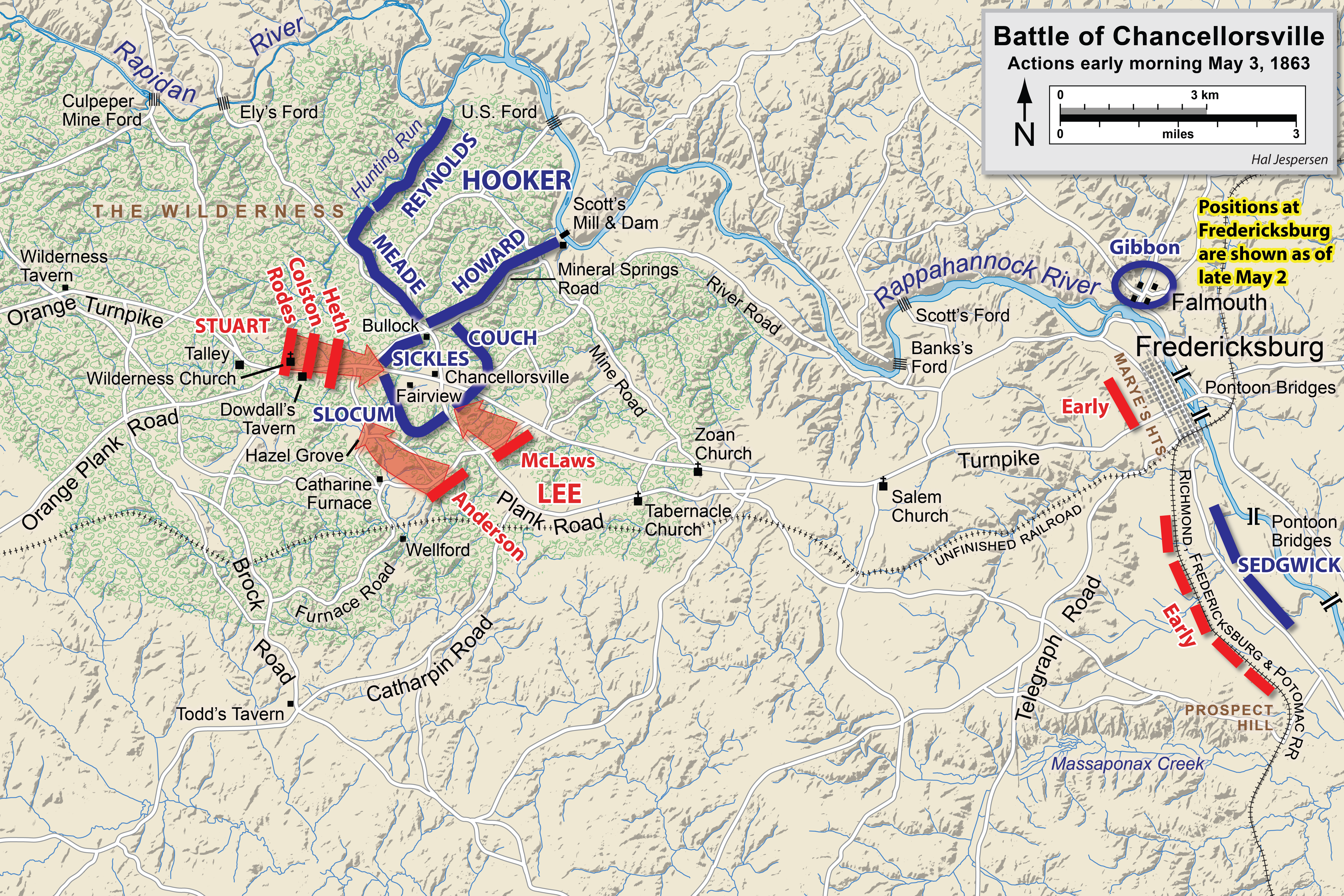
    This glorious victory made us regain confidence in the war. Lincoln replaced General Burnside with General Joseph Hooker to command the army of Potomac. And this May, we met his army at Chancellorsville. The battle continued for a whole week, and we had a very bloody day on May 3rd. People have been saying that this is the bloodiest day since September 17th of 1862, when the Battle of Antietam happened. At Chancellorsville, both sides suffered huge losses. But at last, we managed to overpower Hooker's army.


Battle Plan of May 3 at Chancellorsville

    In this hard fought battle, our biggest loss was the outstanding commander, Stonewall Jackson. He died after an accidental shot from his own men. General Lee was very upset about this loss, and he claimed that he had "lost his right arm". It's true that nobody can ever replace his great leadership.

General Jackson Wounded

    After winning these two victories, General Lee desired to bring a decisive blow to the North. In June, he ordered us to invade the North. He hoped that we would have an opportunity to win international support for the Confederacy, and force an end to the war while demoralizing the Union. The decision of invasion did have good intentions, and most of us supported it because we all were quite confident in our own powers. If we do achieve a victory on the Union land this time, we might soon be celebrating the Confederate victory of the war together.
Yours, John
June 19, 1863

    Honestly, I think General Lee didn't make the right decision this time. Although it seemed like that we lost less men than the North, the North actually had more population and more resources than us. And due to the Militia Act, more and more black soldiers have been joining the Union army. If we invade the North, we would eventually run out of supplies and people. Besides, we just lost Jackson, one of the best commanders in our nation. His leadership cannot be easily replaced. Therefore, in my opinion, our best strategy should be keep defending our homeland instead of offending the enemies.

Letter 2
Dear Brother,
    I'm sorry that you are injured in a battle recently... Are you all right? I hope you will be well soon.
    Our army has entered the Union, and has crossed into Pennsylvania. Yesterday, July 1st, we met John Buford and George Meade's army at Gettysburg. Everything went well the first day, but the situation has turned worse now.
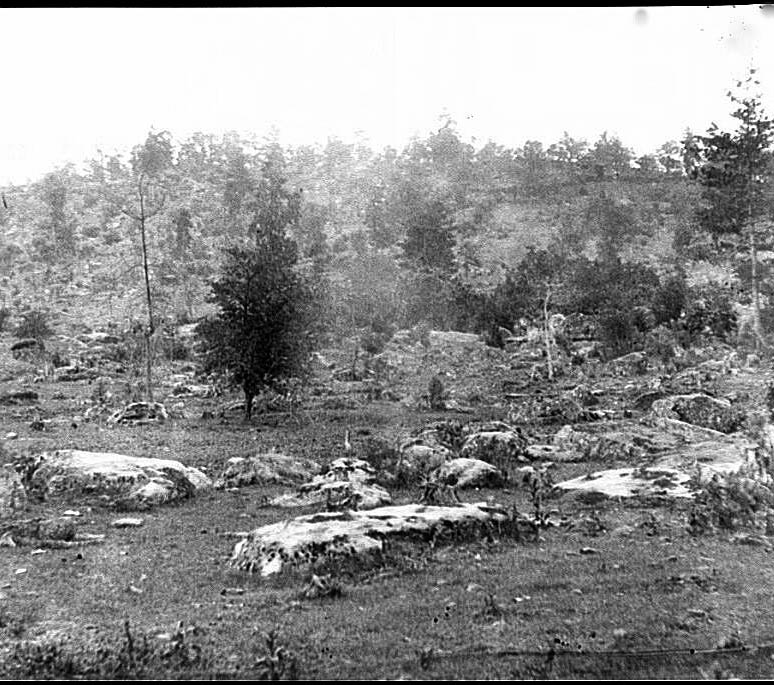
    Today, General Lee commanded us to assualt both ends of the Union line, but we failed to defeat them after several hours of fighting. Meanwhile, the Union soldiers attacked one of the undefended camps at Little Round Top, and forced hundreds of our men to surrender.

Attack at Little Round Top

    I heard that there will be another attack early tomorrow morning. I am nervous because hundreds of my fellow soldiers have lost their lives in this cruel war. But I'm not frightened by all the death happening around me. I will fight till victory is won, or till the very last second of my life.
    Please wish me good luck, as well as all the Confederate soldiers here fighting at Gettysburg.
Yours, John
July 2, 1863

    Unfortunately, this letter turned out to be John's last words. On the very next day, when Lee's army rushed to the center of the Union line, my brother fell under the Union fires, became one of the 50,000 casualties in the Battle of Gettysburg. I'm proud that he did bravely fight until the very last second of his young life. But sadly, the battle ended with the Confederate failure. General Lee lost almost one third of his army, and had to retreat to Virginia. He abandoned the thought of invading the North. In the end, we gained nothing but thousands of cold, badly damaged corpses, including that of my dearest brother.

Casualties in Gettysburg


An Overview of the Battle of Gettysburg

    As I expected, the invasion failed. We didn't have enough soldiers or enough supplies. We should have taken good use of our strategic advantage -- fighting a defensive war on our familiar homeland. If we did not take the risk to invade the North, we might have lost less of our limited population, and my brother probably wouldn't have died.
    This November, while my family in Mississippi were mourning for my brother's death, Lincoln dedicated a cemetry for the fallen Union soldiers at Gettysburg. He gave the Gettysburg Address, and stated that the war was a struggle to fulfill the Declaration of Independence and preserve a nation "dedicated to the proposition that all men are created equal".

Gettysburg Address Manuscript

    This is complete nonsence -- Lincoln tried to justify himself by saying that he pursues equality in all men. But if he is really so dedicated in seeking equality, why doesn't he give the blacks the right to vote? And why does he outlaw women, when they are the same creatures as men? In my view, he's just trying to get the southern land back, and force us to give up on slavery. He never actually considered about the future of southern slave owners. To be honest, I don't see any good he has brought to the nation, except a bloody war and a stubborn naive belief of "equality". Men are not created equal. Nothing is truly fair in this world. The strongest survive -- that's the only law.

Bibliography
Gettysburg Address Nicolay Draft. 19 Nov. 1863. Lib. of Cong. Library of 
     Congress. Web. 21 Feb. 2016. <http://www.papersofabrahamlincoln.org/ 
     how-you-can-help/our-search-for-documents/notes-on-the-gettysburg-address>. 
Jespersen, Hal. "Chancellorsville May 3." Map. Wikipedia. Wikipedia.com, 27 Nov. 
     2010. Web. 17 Feb. 2016. <https://en.wikipedia.org/wiki/ 
     File:Chancellorsville_May3a.png>. 
Kurz & Allison. Battle of Chancellorsville. 1889. Library of Congress, Chicago. 
     Wikipedia. Web. 17 Feb. 2016. <https://commons.wikimedia.org/wiki/ 
     File:Battle_of_Chancellorsville.png>.
- - -. Battle of Fredericksburg, Dec 13, 1862. 1888. Library of Congress, 
     Chicago. Wikipedia. Web. 17 Feb. 2016. <https://commons.wikimedia.org/ 
     wiki/File:Battle_of_Fredericksburg,_Dec_13,_1862.png>. 
Lincoln, Abraham. "Gettysburg Address." Gettysburg. 19 Nov. 1863. Print. Address 
     transcript. 
Milhollen, Hirst D., and Donald H. Mugridge. Gettysburg Photo. 1863. Lib. of 
     Cong. American Pageant. Web. 21 Feb. 2016. <http://college.cengage.com/ 
     history/us/bailey/american_pageant/11e/students/primary/gettysburg.htm>. 
- - -. View of Little Round Top. July 1863. Lib. of Cong. Son of the South. Web. 
     21 Feb. 2016. <http://www.sonofthesouth.net/leefoundation/gettysburg/ 
     view-gettysburg-little-round-top.htm>. 
Smithsonian Channel. The Bloodiest Battle of the Civil War. YouTube. 
     YouTube.com, 2 Dec. 2012. Web. 21 Feb. 2016. <https://www.youtube.com/ 
     watch?v=FcGA-JNcpRI>. 

Monday, February 15, 2016

Life During Wartime, 1863, Week 4

    Being a Confederate soldier in the war, my life has become completely different compared to the past years as a slave owner and a planter. In this post, I have picked some of my journal entries to show what my life was like during the past two years in military.

February 4, 1863
    Another boring day with no fighting. It's been snowing for two days. More and more people are joining the military now. If what I have heard was correct, now one half of the men in the Union, and 4/5 in the Confederacy, have started their service in the military. In the camps, there are many young soldiers who have never left their families for so long in their lives. Many of them are always homesick, and they keep writing letters to their families and friends or spend their spare time practicing religion. These are good ways to escape from reality for a while -- I sometimes do the same to free myself from all the coming dangers.
    The living conditions in the camps are not very good, either. We often encounter shortages of food and other supplies, because the Union have been operating blockages on water routes. In the past two years, we were able to overcome these blockages by using blockade runners, but it seems like the blockade runners are not as effective any more. The lack of a navy has definitely cost us a huge loss.

Photo of Blockade Runner

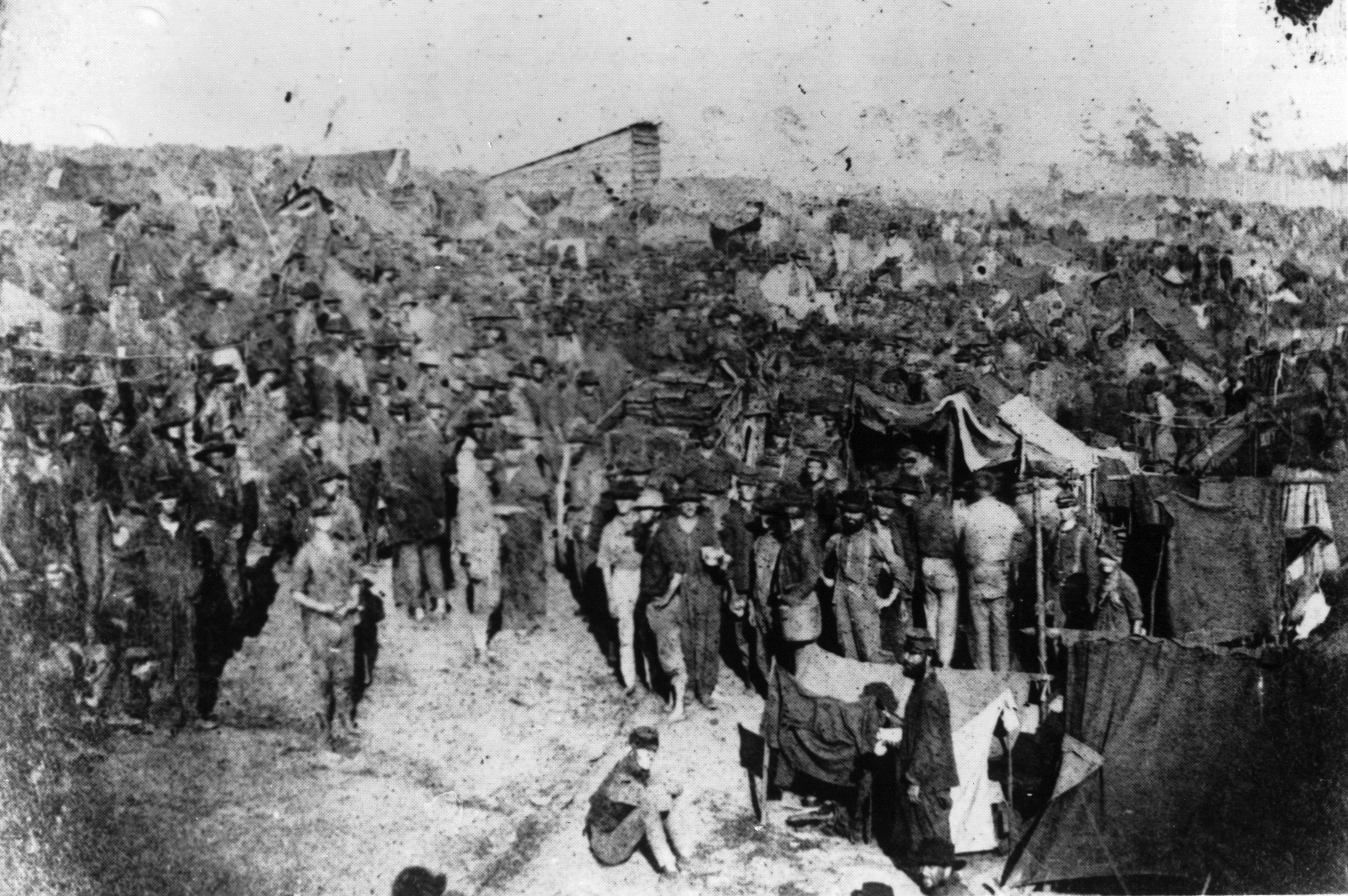
    Besides, due to the bad conditions, many soldiers have fallen ill. Thousands of us have died because of disease and malnutrition. In prison camps, the situation is even worse. I have witnessed a prison camp in Andersonville. It is overcrowded with more than 30,000 people.

Photo of Andersonville

    In the war, we also have to be ready to face the threat of death and injuries at any time. New technologies have enabled us to kill or wound others in a very efficient way. Therefore, I often see my fellow soldiers having to go through amputation, sometimes without anesthesia.
    I have to admit that I'm really lucky to survive till this point. The hardships in military have not put off my passion to serve and fight. Nothing but death will stop me from fighting for my beliefs.

June 15, 1863
    Since the Union passed the Militia Act, many blacks have joined the northern army. In a recent battle at Fort Wagner that I participated in, I encountered the soldiers from the 54th Massachusetts Regiment. It is a force of all black men, led by a white commander, Shaw. Surprisingly, the 54ths were very disciplined and organized. I have to admit that I was shocked by their outstanding courage -- every one of them fought very bravely till they fell onto the ground.

Soldiers from the 54th MA Regiment

    Although I deny the blacks' rights as citizens or humans, I do think that they might make a good amount of contribution in the war if they are allowed in the military. Even if they don't actually fight in the war, they can still take over simple tasks such as cooking and delivering supplies, like many of the blacks in the northern army. When blacks are captured, people can just kill them and make room for others in prison camps.
    Actually, I think it should be encouraged for enslaved blacks in the south to join the military, and free the ones who have fought for us. On one hand, we are great demand of soldiers to cover the loss from previous battles. On the other hand, many slaves are secretly helping the North by serving as spies or scouts. Since the Emanicipation Proclamation, many of them have abandoned their plantations to join the northern forces or rebel against the Confederacy. If we have slaves to fight for us and free them afterwards, they would not have a chance to serve the North, and they would stay loyal to us. We could have taken an upper hand in the war.

July 2, 1863
    I was wounded in a battle last week -- a bullet scraped over my shoulder, and I broke my right leg. The injury wasn't too serious, but I was still quite terrified. I have seen so many people die in this war, but I have never felt it so close to myself before.
    I was carried into a sanitation station, and a female nurse has been taking care of me. Her name is Rebecca, and she's about four years younger than me. She's sweet and caring, and has always made me smile. Rebecca is very patient and delightful, and I enjoy talking to her.
    Today, she shared her experience as a nurse in the war with me. She has been a nurse for two years now. In 1861, she joined the American Red Cross founded by Clara Barton. According to Rebecca, the Red Cross is an organization that takes care of the wounded from both sides, and many women like her have joined to work as nurses. She enjoys working at the front, and is willing to take care of the southern soldiers like me even though she is originally from Maryland.

Red Cross Poster

    Rebecca also told me that many women have taken over important professions since the war has started. Some have been in charge of the family businesses when their husbands are fighting at the front, and some others have joined their brothers or husbands in the military camps to help with chores, or serve as spies and guides. Rebecca's little sister is now working as a teacher in school.
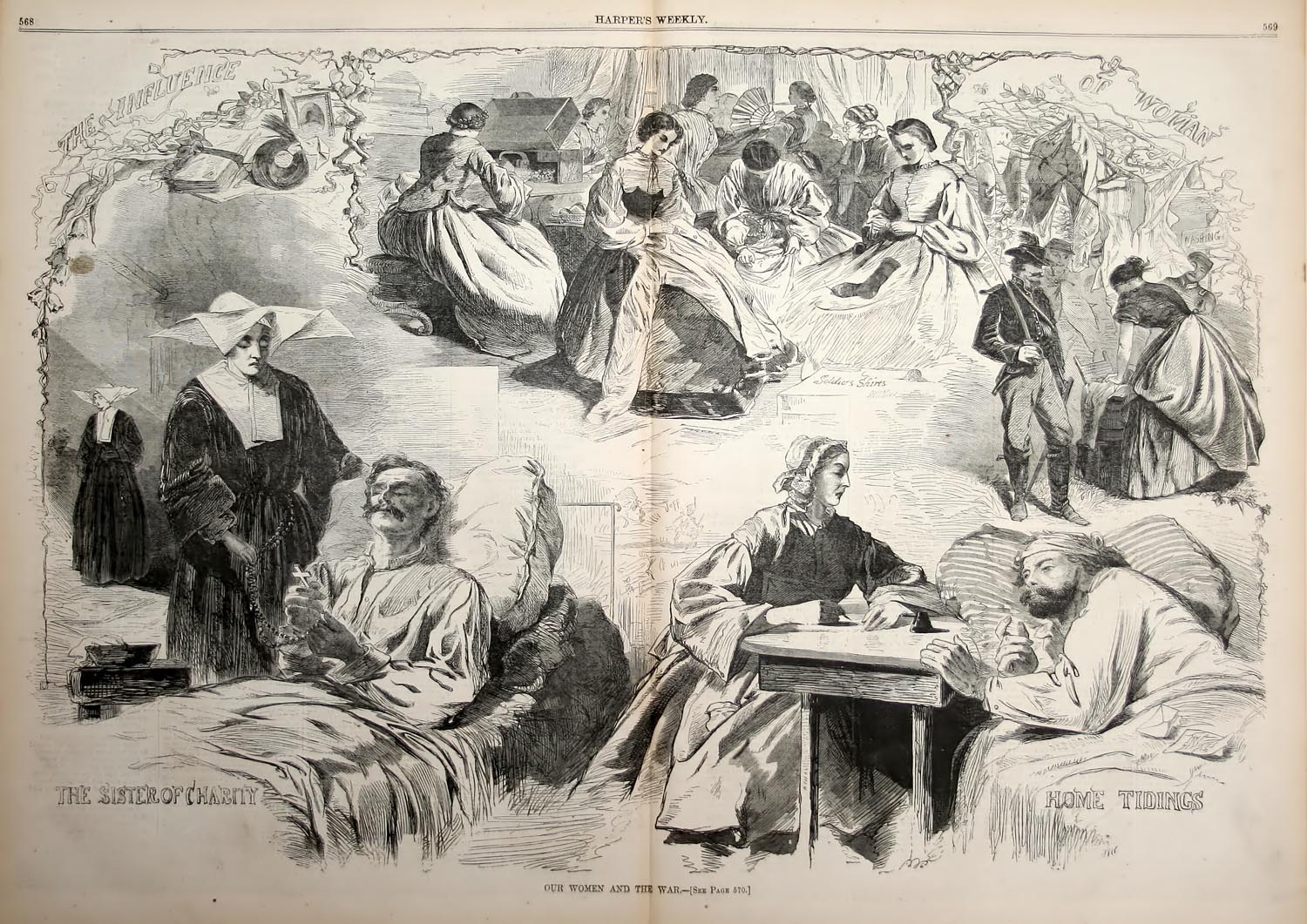
    I think these women are absolutely admirable to have taken over all these responsibilities that usually belong to men. Thanks to them, the wounded are taken care of, and the country still runs with so many people fighting in the war. The picture below, cut off from the Harper's Weekly, concludes my grateful thoughts to all the hardworking women in this war.


A Video about Women's Role in the War

July 20, 1863
    The fourth week at the sanitation station -- I'm recovering, and will soon go back to the front. Probably tomorrow, or the day after. During these four weeks, I've become very close to the nurse, Rebecca. She takes good care of me, and we enjoy sharing our views on everything from two very different perspectives.
    Today, we talked about life during wartime in both the North and the South. I told her that the Confederacy has been having a very hard time paying for the war, because the war has reduced the values of the southern crops, which is the main resource of money. Our president, Davis, tries to ease the economic hardship by seizing Union supplies and raising taxes. However, the southerners resisted the 10% tax on their farm products, and the Union blockade on water has made the situation even worse. Davis issued paper money, but the huge flow of paper money soon caused inflation.

Confederate 100 Dollars Bill

    I also told her about the difficulty in building unity in the south. President Davis is losing support from the people, because the South isn't doing so well in the war. The parties against Davis are growing in size, and there's even voice calling for his impeachment. In response to these voices, Davis enacted conscription laws that allowed the military to seize private properties for war needs, and suspended habeas corpus in the constitution to penalize those who speak against the Confederate government. I expressed my hatred in acts like these. Davis isn't leading the South well enough as the president, and he even abuses people's civil rights to freely speak -- these laws are definitely unconstitutional, and not acceptable, even in wartimes.
    Rebecca told me that Lincoln has done the same to the Union. He suspended habeas corpus, and allowed the military to arrest those who show disloyalty to the Union or criticize him. There has been a group called "Peace Democrats" rising against Lincoln's leadership. They demanded peace and called to end the war, sometimes through violent ways (which I think is very contradictory). The Union is also going through a hard time keeping unity, said Rebecca. Earlier this year, the Union government announced the conscription for troop demands. It stated that all white man between 20-45 in age might be called for military service at any time, unless they pay 300 dollars for a replacement.
    "It is a cruel law," I said, "because all the poor working class don't really have a choice but to leave their families and join the war."
    "It is." agreed Rebecca, "that's why the riot happened."
    She was talking about the New York Draft Riot from July 13th to 16th. In New York, the poor white working men rebelled because they fear to lose their jobs to blacks after they are called in for war. I think they did the right thing -- if they don't do anything in response to the unfair government decisions, they will always be oppressed. But they targetted the wrong people. The blacks actually have no fault. Lincoln and the Union government should be the ones to blame. It's very unjust to scale people's lives on how much they earn. If the poor do not wish to fight, the government has no right to force them risk their lives.

New York Draft Riot

    Then I asked Rebecca how the Union managed to pay back war costs. And she replied that the Union collects imcome tax, which started at 3% but keeps increasing, and raises tariffs as well as the cost of imported goods. The Union also heavily relys on sale of government bonds, according to her, the sale of bonds has accumulated to billions. The Confederacy has also sold bonds, but we actually get no guarantee that the bonds would be paid back. The Union also issued their first common currency in the form of paper money, known as the "Greenbacks", through the 1862 Legal Tender Act.

Paper Currency of the Union

    In order to pay for the war, the Union also opened up the western lands for sale at a very low price through the Homestead Act of 1862. Selling land has always worked when the government is in need of money.
    I told Rebecca that I think the North has better economic strategies than us, therefore they struggle less on collecting enough money to fill the war costs. They also have a better vision on constructing the nation. Their large railroad network has turned out to be a success, because it provides great help on transporting supplies to the front.
    We also talked about our families. I told her, with great pride, that both my brother and me are serving as Confederate soldiers. And she said that her family is facing a division, like many of the other border state families. Her elder brother supports slavery, but her younger brother has joined the Union army to fight against it.
    "Border states should have joined the Confederacy since the first place," I said, "so we can fight together and have a bigger chance of winning." She smiled, but did not reply.
    We ended the afternoon in a friendly discussion, and then she had to leave for some more nursing work. I returned to my bed, read a newspaper, and did some packing for my departure. I was enjoying my time here too much, that I almost forgot there's still a war going on. Soon the fantasy is going to end, I said to myself. I would feel truly, truly empty after leaving Rebecca, because she is a perfect person to share my feelings to.
    But late in the evening, Rebecca suddenly came to me, and started crying.
    "I don't want you to leave!" she said while sobbing, "I think I love you... Aaron, can you stay with me please?"
    I hugged her, and then kissed her. Everything happened in a second or two. I finally recognized my feelings to her.
    "Me too, Rebecca. I love you. I love you so much. If I survive the war, I'll marry you." I said.
    "You have to survive the war. Promise me."
    "I will. I promise."

Bibliography
Confederate States of America $100 Note. N.d. Louisiana State University Special
     Collections Hill Memorial Library. Web. 15 Feb. 2016.
     <http://exhibitions.blogs.lib.lsu.edu/?page_id=707>.
Getty Images. Red Cross Recruiting Poster. 1917. PBS Newshour. Web. 15 Feb.
     2016. <http://www.pbs.org/newshour/updates/
     clara-barton-founding-american-red-cross/>.
Liu, Shako. Women's Role In The Civil War. YouTube. YouTube.com, 7 Dec. 2013.
     Web. 15 Feb. 2016. <https://www.youtube.com/watch?v=Pck40xLO0qw>.
"New York Draft Riots." Harper's Weekly 1 Aug. 1863: n. pag. Wikipedia. Web. 15
     Feb. 2016. <https://commons.wikimedia.org/wiki/
     File:New_York_Draft_Riots_-_looting.jpg>.
"Our Women and the War." Harper's Weekly 1862: n. pag. Son of the South. Web. 15
     Feb. 2016. <http://www.sonofthesouth.net/leefoundation/civil-war/1862/
     september/civil-war-women.htm>.
Riddle, A. J. Andersonville Prison. Aug. 1864. National Park Service. Web. 15
     Feb. 2016. <http://www.nps.gov/media/photo/
     gallery.htm?id=A6A1C636-1DD8-B71C-07DB9DB39A2A1074>.
Soldiers from the 54th Massachusetts. N.d. New England Historical Society. Web.
     15 Feb. 2016. <http://www.newenglandhistoricalsociety.com/
     brutal-fanatic-founded-glorious-54th-massachusetts-regiment/>.
Steamship Colonel Lamb. 1864. U.S. Naval Historical Center Photograph.
     Civilian Ships. Web. 15 Feb. 2016. <http://www.ibiblio.org/hyperwar/
     OnlineLibrary/photos/sh-civil/civsh-c/col-lamb.htm>.
United States Currency 5 Dollar Legal Tender Note 1862. 1862. World Banknotes &
     Coin Pictures. Web. 15 Feb. 2016. <http://www.worldbanknotescoins.com/
     2014/10/1862-5-five-dollar-legal-tender-note.html>.

Sunday, February 14, 2016

Taste of War, 1863, Week 4

    It has been almost two years now since I became a Confederate soldier. The summer of 1861, I had my first taste of war in the Battle of Manassas (or the Battle of Bull Run for northerners). That was a distant battle outside Washington D.C. We met the Union forces at Bull Run near Virginia. It was a hard-fought battle. The Union got the upper-hand at first, but we later managed to conquer them. We suffered about 2,000 casualties, while the Union army, led by General McDowell, lost about 2,680 men. Under the leadership of General Thomas Jackson, we defeated the Union forces and sent them back to Washington. General Jackson, as a result, won the name of "Stonewall Jackson" for his outstanding courage and leadership. We all fought bravely in the battle. I had some slight injury, but there was no big deal. I think I was able to kill at least five or six people. The war sure is very dangerous, but it has brought me so much excitement.

Situation Map of the Battle on July 18th

    Although many were killed or wounded on our side, the Battle of Manassas was still a glorious victory for us, because we proved our power to the Union, and showed them that we would not be defeated so easily. We successfully shook the prejudice of the northerners, and Lincoln had to call for additional troops to support the war.

Victory in the Battle of Bull Run

    Unfortunately, we suffered a traumatic defeat in the Battle of Antietam last September. Although I did not participate that battle in person, I have been hearing about it all the time. After achieving several victories, General Lee gained much confidence and planned to take a further step. He led troops into Maryland, a border state that stayed loyal to the Union. He hoped to inspire a pro-Confederate uprising in Maryland, obtain food supplies, and win European recognition of the Confederacy through a victory on the Union land. On September 8th, he issued the "Proclamation to the People of Maryland", and invited Marylanders to ally with Confederacy. The Marylanders, however, reacted quite indifferently to Lee's call. And even worse, the Union found an abandoned copy of the Confederate battle plan, which enabled them to form a complete siege on the Confederate army, as the map shown below:

Situation Map of the Battle of Antietam

    As a result, the bloodiest day of the war happened on September 17 -- more than 23,000 soldiers were killed or wounded in the Battle of Antietam at Sharpsburg, Maryland. Although the Confederate forces tried hard to fight back, they still failed to avoid the defeat. General Lee, sadly, had to retreat to Virginia, and the border state Maryland stayed in the Union. A sad photograph of the battlefield was published on the New York Times:

Battle of Antietam Casualties

    This bloody day, for sure, will be remarked in history. Since this battle, the Confederacy lost the upper hand of the war between the North and the South, and our army suffered a huge loss. I think General Lee actually had a good and thoughtful plan for this battle, but was turned down by the Marylanders. Maryland, as well as the other border states, decided to stay loyal to the Union, because he insisted that his only goal was to save the Union, and would not touch slavery in these states. It's unwise for the border states to remain in the Union, because the Union could easily fail if they all joined the Confederacy; besides, Lincoln's promise was clearly a lie, and the only way they can keep a safe system for slavery was to secede from the anti-slavery Union.
    After the Battle of Antietam, many southerners began to lose confidence in the war, and wished for a peaceful end through negotiation. However, on September 22, 1862, five days after the cruel battle, Lincoln announced a fatal decision which completely ended the possibility of negotiation -- the Emancipation Proclamation.

Emancipation Proclamation Copy

    The Proclamation, officially issued on January 1st, 1863, stated that since that day, "all persons held as slaves within any State or designated part of a State, the people whereof shall then be in rebellion against the United States, shall be then, thenceforward, and forever free." It did not apply to places under Union control, including the loyal border states. Obviously, Lincoln hoped that the southern states would surrender before January 1st. However, non of the Confederate states has surrendered -- our only choice is now to fight till the end.
    Although most southerners like me detest the Proclamation because it left us no choice but to defend ourselves until the very end, many northerners who used to criticize Lincoln are now praising him. It also had a great influence in the northern blacks, I heard, because it made them want to join the military and fight against slavery. Therefore, the Union Congress took this opportunity and passed the Militia Act, which allowed blacks to be accepted in armies. It's a terrible idea -- how shameful it is to have black people as soldiers! Besides, the Union army will probably grow a lot in size, which does no good to our side.

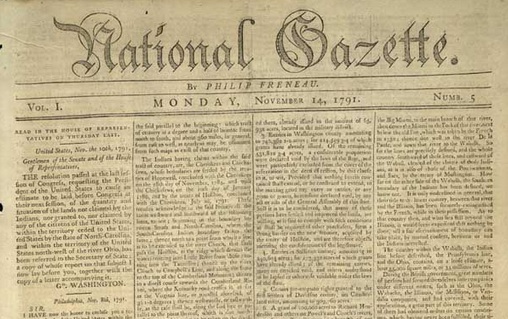
Article about Militia Act on Newspaper

    Personally, I think the Emancipation Proclamation is a huge shame for the name of "free nation" of the United States. The president, who is supposed to be neutral and fair to all states, has clearly showed favor upon free states over slave states. Lincoln might has been planning on an announcement like this since long before the Battle of Antietam. Although he did not actually free any slave through the Proclamation, he had proved that the war is about slavery, instead of maintaining the Union. If the Confederacy loses, we will lose our properties and our rights to own slaves. I can't believe my home country has become such an awful place. Led by a dictator, the United States now has started to take away people's properties, as well as their only way of living.
    Now, what else can I do, except to stay loyal to the Confederacy, and fight till the end?

Bibliography
Bardy, Mathew B. Battle of Antietam. 1862. The New York Times. Web. 11 Feb.
     2016. <http://topics.nytimes.com/top/reference/timestopics/subjects/c/
     civil_war_us_/battle_of__antietam/index.html>.
"Bull Run Casualties." History Net. World & US History Online, n.d. Web. 10 Feb.
     2016. <http://www.historynet.com/bull-run-casualties>.
Jespersen, Hal. "Antietam Overview." Map. Wikipedia. Wikipedia.com, 25 Oct.
     2010. Web. 12 Feb. 2016. <https://commons.wikimedia.org/wiki/
     File:Antietam_Overview.png>.
- - -. "First Bull Run July 18." Map. Wikipedia. Wikipedia.com, 10 Aug. 2007.
     Web. 10 Feb. 2016. <https://commons.wikimedia.org/wiki/
     File:First_Bull_Run_July18.png>.
Kurz & Allison. First Battle of Bull Run. 1889. Library of Congress.
     Wikipedia. Web. 10 Feb. 2016. <https://commons.wikimedia.org/wiki/
     File:First_Battle_of_Bull_Run_Kurz_%26_Allison.jpg>.
National Gazette 12 Apr. 1792. George Washington's Mount Vernon. Web. 14 Feb.
     2016. <http://www.mountvernon.org/digital-encyclopedia/article/
     national-gazette/>.
Proclamation No. 95. 3 C.F.R. 1863. Featured Documents. Web. 12 Feb. 2016.
     <https://www.archives.gov/exhibits/featured_documents/
     emancipation_proclamation/transcript.html>.
Roberts, W. Reproduction of Emancipation Proclamation. 1864. Library of
     Congress. Wikipedia. Web. 12 Feb. 2016. <https://commons.wikimedia.org/
     wiki/File:EmancipationProclamation.jpg>.

Monday, February 8, 2016

Union VS Confederacy, 1861, Week 3

    I have come back to Mississippi and have joined the Confederate army. For the first time, my dream has come so near. As part of the training, our commanders have told us about our own advantages and disadvantages in this war. I have summarized the advantages of both sides in this chart below:

Advantages
Disadvantages
Union
Confederacy
Large population (22 million)
Small population (9 million, including 3.5 million slaves)
Industrialized
Coal, iron, gold, silver…
Larger railroad network for moving troops and supplies
Agriculture-centered
Cotton economy
Have a small and organized navy
250 warships, building more
No navy
Could be blocked on ocean
An established government and a powerful leader (Abraham Lincoln)
A new government and an inexperienced leader (Jefferson Davis)
Some northerners want to let go the South
Not so willing to sacrifice for war
Fighting for survival
Willing to fight
Small forces (16,000 men)
Doesn’t have time to organize an efficient army
Strong military tradition
Good military leaders (Robert E. Lee)
Offensive war
Needs to conquer the South
Defensive war
Only needs to avoid defeat
War in enemy territory
War on familiar land

    To sum up, we have both psychological and strategic advantages compared to the North. I don't know if our President, Davis, is as reliable, because he is not very experienced as a leader. Despite that, I do believe he will be loyal to the South and remain a supporter of slavery. Also, the fact that we are on the defending side brings us much confidence in winning the war.
    One of our main military leaders is Robert E. Lee from Virginia. He turned down the Union offer as a commander and accepts the command of Virginia, although he personally opposed slavery and secession. I think he is an admirable man who remains loyal to his home state, and is willing to sacrifice his own values for the better deed of his family and his state. I believe he is a good commander, and he will lead us to victory through his outstanding military skills.


Bibliography
Robert E. Lee. N.d. Library of Congress. Civil War Trust. Web. 8 Feb. 2016. 
     <http://www.civilwar.org/education/history/biographies/ 
     robert-e-lee.html?referrer=https://www.google.com/>. 

A Big Year, 1861, Week 3

A Letter From Mississippi

Hello Dear Aaron,
    How are you doing? I haven't heard from you in a while. We are all doing well here in Mississippi. We had a good year of harvest.
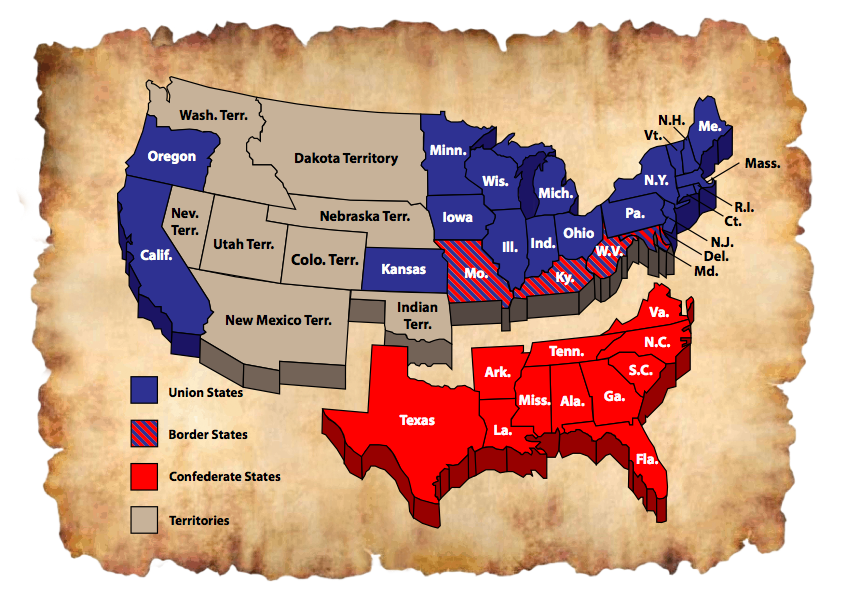
    I have an exciting news for you: your other brother, John, has joined the glorious Confederate army. As you might have heard, Mississippi, together with another 10 states, have seceded the Union and formed the Confederate States of America since this Februrary. We can no longer tolerate the northern antislavery activities, or the abolitionist president, Lincoln. Although he promised not to touch slavery in southern states, we still believed that he eventually would. And now with our new constitution, though slave trade has been prohibited in order to win support from France and Britain, protection over slavery is finally guaranteed. Our new president, Jefferson Davis, is a former war hero and a planter from Mississippi (be proud). He favored the 1850 Compromise, and is also a strong supporter of our right of secession. Most of us trust his leadership, and are preparing for the war. The war is going to be tough, but we believe that victory belongs to us.


Jefferson Davis

Map of Confederate States

    We have also heard that Kansas, the territory you are living in, now has become a free state in the Union. We are very sorry about that. If you ever need a place to stay, home will always be here for you. Dear brother, we wish you the best luck.
Sincerely,
Your brother, William

    I'm very glad as I read this letter. On one hand, I'm glad that my little brother John has joined the Confederate army. And on the other hand, it's good to know that my family is still awaiting for me to go back. This year, Kansas finally joined the Union as a free state. That upsets me a lot, and now I have to quit the plantation and find another way of life.
    The war between the Union and the Confederacy has already started. Before Lincoln stepped into office this March, South Carolina left the Union along with 6 other southern states. Although a senator named Crittenden made an effort to keep the Union by proposing an amendment that allowed slavery in western territories south of the Missouri Compromise line, Lincoln opposed this plan and it was voted down in the end. I think the southern states made the right choice by seceding the Union. Only in this way can they protect slavery and keep their ways of living. And also, I believe that Lincoln holds part of the responsibility which resulted in the failure of a final compromise. If he did not insist to keep all the western territories free, the South would not be as furious, and some states might not later join the Confederacy.
    On March 4th, Lincoln took office and gave a speech that showed intention to preserve the Union, although stating that he opposed violence. Personally, I do not trust him at all -- in what other way can he keep the Union, besides going to war? 
    My concerns turned out to be true after Fort Sumter fell. Fort Sumter, one of the only 4 southern forts that remained in the Union, was the guard of Charleston Harbor. This small fort has been running out of supplies since early this year. The soldiers asked for supplies, and Lincoln made a smart decision (I have to admit) to only send food but no arms to the fort. However, President Lincoln still failed to keep his promise of peace. In April, the Confederacy ordered Fort Sumter to surrender, but the Union troops refused to do so. As a result, the Confederate troops fired, which caused the fort to fall. In response to the anger among northerners, Lincoln declared war against Confederacy on April 15.

Fall of Fort Sumter

    While Lincoln was calling for volunteers to fight the war, the South was also preparing for war by raising troops and money. Besides, four more states joined Confederacy.
    A video summarizing the first battle of the war:
https://www.youtube.com/watch?v=cv-pTU99RcY

    In my opinion, secession of the South as well as the war are both inevitable. The tension between free and slave states have existed for decades, and nobody had actually made effective effort to improve the situation. The imbalance between slave states and free states became more and more intolerable, and the southerners have felt threatened because their properties and their way of living might be taken away if the North further advance in their antislavery activities. Although the South fired first, I still blame the North for starting the war because they broke the balance. The southern planters were just trying to make a living out of slavery -- and obviously, the abolitionists did not see their hardships. They kept forging their beliefs, and caused states like Kansas to be free. I also blame the federal government of the Union, for they never made a serious effort to keep the balance. Political strategies like popular sovereignty can never be the true solution to the problem. If the federal government had insisted more on protecting the south, the situation wouldn't have been as bad. I'm not calling for dictatorship, but I don't think ignoring the needs of the minority (which is almost half of the country) is true democracy, either.
    Now since the war has started, there's no way to go back. The war, actually, has given me the inspiration to realize my dream to serve the nation that I have always had since childhood. I will go back to my home in Mississippi, and join the Confederacy army, just like my brother. I will do my best, even sacrifice my life, to protect my home, my family, and what I believe is right.

Bibliography
Currier & Ives. Bombardment of Fort Sumter. 1861. History Today. Web. 7 Feb. 
     2016. <http://www.historytoday.com/marcus-cunliffe/ 
     causes-american-civil-war>. 
Jefferson Davis. N.d. National Archives and Records Administration. National 
     Park Service. Web. 7 Feb. 2016. <http://www.nps.gov/resources/ 
     person.htm?id=173>. 
Kritzer, Lauren. Fort Sumter and the Civil War. YouTube. YouTube.com, 19 Aug. 
     2012. Web. 8 Feb. 2016. <https://www.youtube.com/ 
     watch?v=cv-pTU99RcY>. 
"Map of the Civil War." Map. Evan's Civil War Project. Weebly.com, n.d. Web. 7 
     Feb. 2016. <http://evanscivilwarprojectwebsite.weebly.com/>.